Systems Approach for Antimicrobial Stewardship (AMS)
Strengthening antimicrobial stewardship through systems thinking, evidence-based interventions, and digital health approaches.
Offered by Postgraduate Institute of Medical Education & Research
About This Course
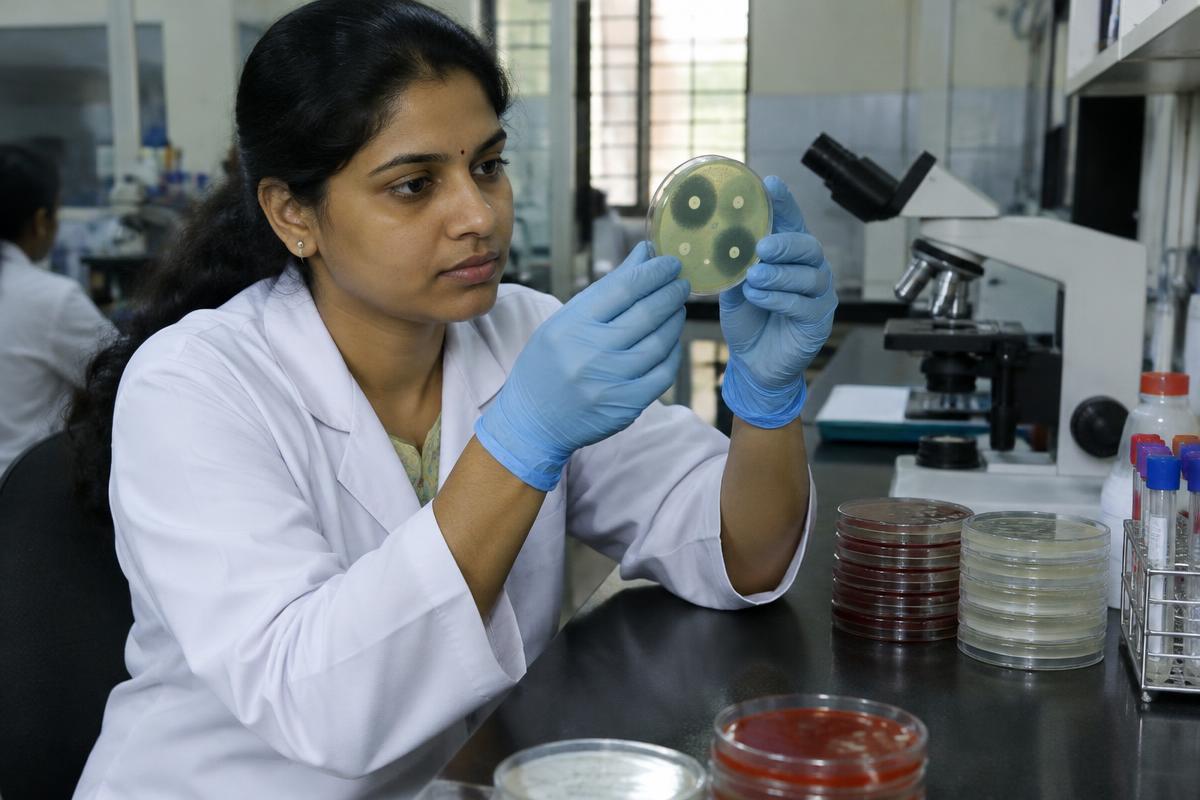
Antimicrobial resistance (AMR) is a major public health challenge that requires coordinated action across healthcare systems. Effective antimicrobial stewardship (AMS) involves understanding complex healthcare environments, engaging stakeholders, designing appropriate interventions, and evaluating their outcomes.
The Systems Approach for Antimicrobial Stewardship (AMS) course, developed by the Post Graduate Institute of Medical Education & Research (PGIMER), Chandigarh, under the DMgtAsia project, introduces learners to the concepts, core elements, and complexities of antimicrobial stewardship.
With a particular focus on low- and middle-income countries (LMICs), the course explores how systems thinking can support the planning, implementation, and evaluation of AMS interventions. It also addresses the importance of data for antimicrobial stewardship policies and the challenges associated with data availability and use in diverse healthcare settings.
Through six structured learning blocks, participants develop the knowledge and skills needed to understand AMS ecosystems, design stewardship interventions, evaluate outcomes, and explore the digitalization of antimicrobial stewardship.
Course Objectives
By the end of the course, participants will be able to:
- Understand the ecosystems, healthcare contexts, and stakeholders involved in antimicrobial stewardship within the broader framework of antimicrobial resistance.
- Explain the core concepts, elements, and complexities of antimicrobial stewardship, particularly in low- and middle-income countries.
- Apply systems thinking to the planning, implementation, and evaluation of antimicrobial stewardship interventions.
- Understand the data requirements for AMS policies and recognize related challenges in LMIC settings.
- Develop the knowledge and skills required to support antimicrobial stewardship initiatives and measure their outcomes across diverse healthcare environments.
Course Curriculum
6 learning blocks
Introduces the challenge of antimicrobial resistance and its importance within healthcare systems.
Detailed lesson content for this block is available to enrolled learners on the DMgtAsia Moodle platform.
Who Should Enroll?
The course is open to anyone interested in addressing antimicrobial resistance, particularly:
- Medical graduates.
- Individuals with a master's degree in Health Informatics, Public Health, or Hospital Management.
- Postgraduates in life sciences, including Microbiology, Pharmacology, Biotechnology, and Pharmaceutical Sciences.
Course Designers and Resource Persons
Prof. Nusrat Shafiq
Course DesignerClinical Pharmacology Unit, Department of Pharmacology, PGIMER, Chandigarh
Dr. Ritika Kondel Bhandari
Course DesignerPost Doctoral Fellow, CAMO-Net, Department of Pharmacology, PGIMER, Chandigarh
Prof. Neelam Taneja
Resource PersonDepartment of Microbiology, PGIMER, Chandigarh
Prof. PVM Lakshmi
Resource PersonSchool of Public Health and Community Medicine, PGIMER, Chandigarh
Dr. Nikhil Aravind
Resource PersonDM Resident, Clinical Pharmacology Unit, Department of Pharmacology, PGIMER, Chandigarh
Dr. Soumya VU
Resource PersonMedical Project Scientist III, Department of Pharmacology, PGIMER, Chandigarh
Learning Experience
Course materials are delivered digitally through the DMgtAsia Moodle platform, organised into structured learning blocks in a offline / online / hybrid format.
Course Provider
PGIMER
Postgraduate Institute of Medical Education & Research
Chandigarh, India
Enrollment
Antimicrobial Stewardship
Enrollment for the current cohort is closed. The next cohort is planned for the last week of January 2027.